
Skip garage door maintenance this time of year and the bill usually comes due in January, right when you're hosting family or your seasonal neighbors are back and opening their garage for the first time in months. A spring that was already stressed by summer humidity can snap on a cold morning. A rusted track that got worse every afternoon downpour can finally seize up. And a door that doesn't seal right lets in the cooler night air, plus whatever insects and rodents are looking for a warmer spot once temperatures drop. None of that is expensive to prevent. It gets expensive to ignore.
Check what hurricane season actually did to your door
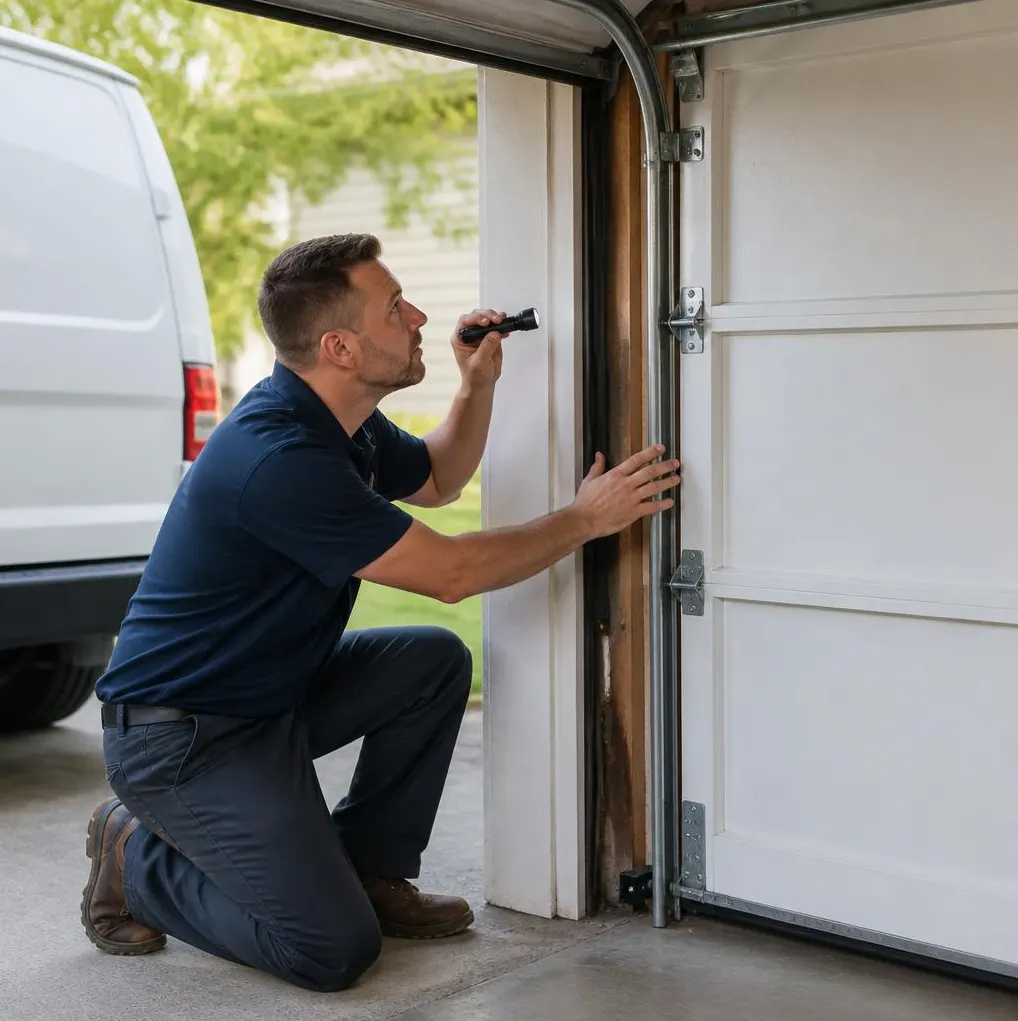
Even if no named storm hit you directly, months of wind-driven rain, pressure changes, and humidity swings take a toll on a garage door system. Walk around the door and look for things you might have missed during the busier storm months:
- Panels that look slightly bowed or warped, especially on the bottom section where water pools
- Hardware (hinges, brackets, roller carriages) that's loose from repeated flexing during high winds
- Weep holes or drainage channels clogged with debris from afternoon downpours
- Any reinforcement struts that were added for wind-load protection — confirm they're still securely fastened
This is also a good time to open and close the door a few times manually (with power to the opener disconnected) and watch for binding, scraping, or uneven movement. A door that doesn't glide smoothly now will only get harder to move as parts corrode further.
Rust and salt air don't take a season off
Coastal salt air keeps working on metal components year-round, but the shift into drier months is a smart time to actually address it rather than just note it. Look closely at:
- Spring coils — surface rust here is a warning sign, not just cosmetic
- Track brackets and bolts, particularly on doors facing the water or open to prevailing winds
- Cable ends where they anchor to the bottom bracket
- Hinges and rollers, which should turn freely without grinding
A light coating of the right lubricant (not WD-40, which attracts dust) on hinges, rollers, and tracks helps slow corrosion and keeps moving parts from binding as the air dries out and parts contract slightly with cooler temperatures.
Springs and cables: watch for temperature swings
Metal contracts in cooler air, and torsion springs that were already fatigued by a hot, humid summer are more likely to show their weakness once overnight temperatures start dropping. Common warning signs include a door that feels heavier than usual when moved by hand, a visible gap in the spring coil, or a loud bang from the garage that turns out to be a cable snapping under tension. Springs and cables are under serious load and are not a safe DIY repair — if you see fraying, rust, or gaps, that's a call-a-professional situation, not a weekend project.
Weatherstripping and seals for cooler nights
The bottom seal and side weatherstripping do double duty here: keeping out wind-driven rain during storms and, now, keeping out cooler night air and pests looking for shelter as temperatures ease down. Check for:
- Cracked, flattened, or torn rubber along the bottom of the door
- Gaps at the corners where the seal has pulled away from the frame
- Daylight visible around the edges when the door is closed
Replacing worn weatherstripping is inexpensive compared to dealing with a garage full of humidity-driven mold or an uninvited rodent problem.
Tune up the opener before seasonal residents return
If your home sits empty for stretches during the year, or you're getting it ready for returning seasonal residents or guests, the opener is often the part that fails quietly. Batteries in remotes and keypads drain even when not in use. Safety sensors can get knocked out of alignment or covered in dust from a season of use. Test the auto-reverse safety feature, replace remote batteries, and wipe down the sensor eyes so the door doesn't refuse to close (or worse, doesn't stop when it should) the first time someone uses it in months.
When to call Vero Beach Garage Door Pro
If you're seeing rust on the springs, a door that binds or feels heavier than normal, or weatherstripping that's cracked and letting in air, it's time for a proper look. Our Garage Door Tune-Up & Maintenance service covers the full inspection — hardware, springs, cables, tracks, and opener — so small issues get caught before they turn into a Saturday morning emergency. If a spring has already failed or a cable has snapped, our Garage Door Spring Repair and Garage Door Cable Repair teams handle those safely with the right tools and tension equipment, not guesswork.
Give us a call before the season gets busy. Vero Beach Garage Door Pro serves Vero Beach, Sebastian, Fellsmere, Indian River Shores, and the rest of the Treasure Coast — schedule your winter tune-up today and head into the season with a door that works right the first time.