
Short Answer
Your garage door isn't actually frozen in Vero Beach — it almost never gets cold enough here for real ice. What you're feeling is usually one of a handful of things: a swollen bottom seal stuck to the slab, rust on the rollers from salt air and condensation, lubricant that's gone stiff or washed out, or spring tension that shifted slightly overnight. The fix depends on which one it is, and a technician checks them in a specific order to figure out which.
What You'll Notice
A door that's binding from cool, humid conditions doesn't always announce itself the same way twice. Common symptoms include:
- The door won't budge when the opener runs, and the motor strains or hums without moving it
- A scraping or peeling sound right at the bottom as the door finally breaks free
- The door opens a few inches, stops, and reverses on its own
- One side lifts before the other, so the door looks like it's trying to go crooked
- The rubber seal along the bottom looks flattened or stuck to the concrete when you look closely
- The door feels noticeably heavier to lift by hand than it used to
None of these mean you need a new door. They're symptoms, and the cause is almost always fixable once you know where to look.
Causes, in the Order a Technician Checks Them
1. The Bottom Seal Stuck to the Slab
After a cool, damp night following an afternoon downpour, the rubber weatherstripping along the bottom of the door can swell slightly and press flat against the concrete. It's not frozen, but it grips the same way ice would. This is the first thing worth checking because it's the easiest to fix and the easiest to mistake for something worse. The fix is simple: gently pry the seal free with a flat tool, inspect it for cracking or permanent swelling, and apply a silicone-based protectant to keep it flexible. If the seal is cracked or brittle, replace it — a stiff seal will keep sticking no matter what you do to the slab.
2. Rust and Buildup on the Rollers and Track
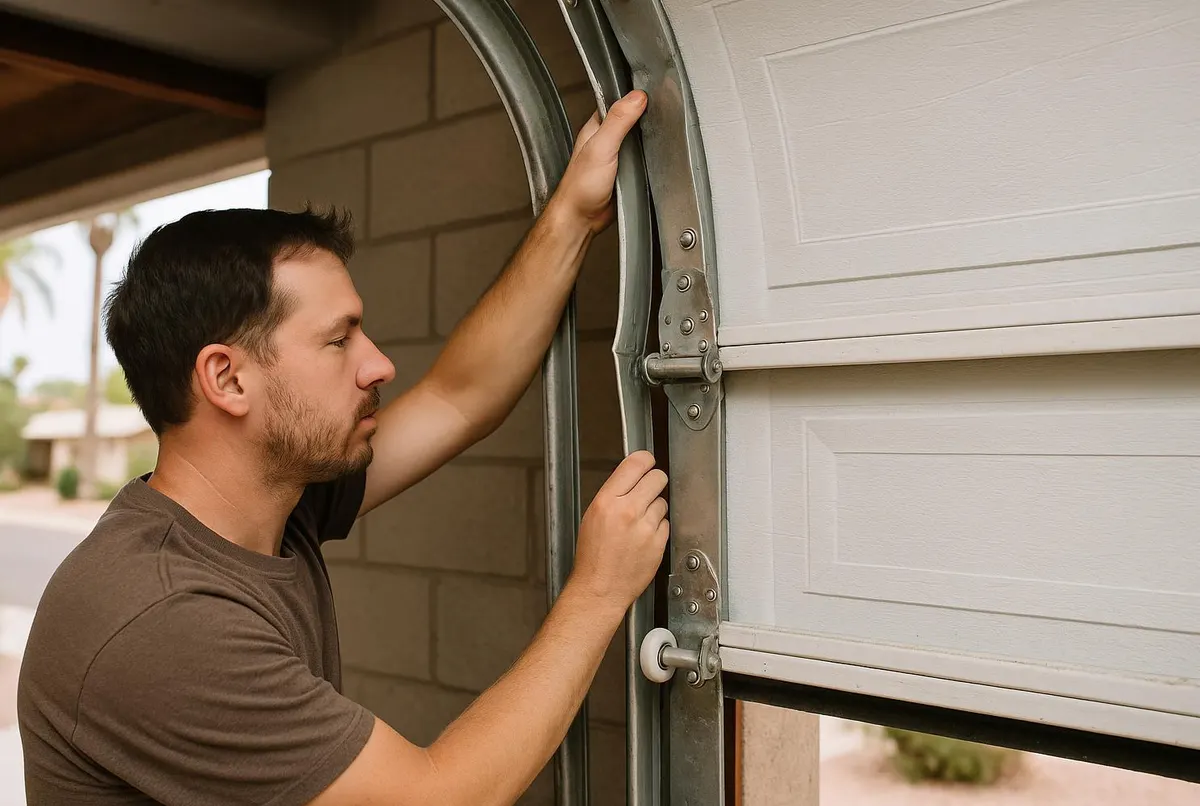
Coastal salt air combines with overnight condensation to put a thin film of surface rust on steel rollers and tracks, especially on doors that face the water or get regular ocean breeze. That rust creates just enough friction to make the door hesitate or grind as it travels. A technician will clean the track with a dry cloth, check the rollers for pitting, and lubricate with a silicone-based garage door lubricant — never a petroleum product like WD-40, which attracts dust and grit. If rollers are visibly rusted or flat-spotted, swapping them for nylon rollers solves the problem for good and holds up better against salt exposure long-term.
3. Lubricant That's Hardened or Washed Away
Humidity swings do two things to the grease on your hinges, springs, and bearings: afternoon rain washes it thin, and cooler overnight temperatures can make what's left a bit stiffer. Either way, moving parts that should glide start to catch. The fix is a full relube — wiping off old, grimy grease and applying fresh lubricant to every hinge, the spring coils, and the bearing plates. This is routine maintenance, but it's often skipped until a door starts acting up.
4. A Small Shift in Spring Tension
Metal contracts slightly as temperatures drop, even in a mild Florida cold snap, and that can change spring tension just enough for the opener to struggle lifting a door it normally handles with ease. A technician checks this with a balance test: disconnect the opener and see if the door holds position halfway up on its own. If it doesn't, the spring tension needs adjusting. This isn't a DIY step — torsion springs are under serious load and adjusting them without the right tools is dangerous.
5. Opener Sensors Fogged with Condensation
If the door starts to close and reverses, or won't close at all, the photo-eye sensors near the bottom of the track may have condensation on the lenses, which reads as an obstruction. Wiping both sensors with a dry cloth and confirming they're aligned usually resolves this in seconds. If it keeps happening, the sensor wiring or limit switch settings may need a closer look.
6. Swollen Panels on Older Wood-Composite Doors
Last on the list because it's the most involved: on older wood or wood-composite doors, sustained humidity can cause a panel to swell just enough to bind against the frame or an adjacent panel. This shows up as a door that sticks in one specific spot every time, not randomly. The fix ranges from sanding and resealing the panel edge to replacing the panel outright if the swelling has caused warping.
When to Call Vero Beach Garage Door Pro
If you've checked the seal and wiped down the track and the door is still sticking, stopping, or straining, it's time to get a technician out before a small binding issue turns into a snapped cable or a bent track. We handle this with a Garage Door Tune-Up & Maintenance visit that covers lubrication, roller inspection, and spring balance, or an Off Track Door Repair if the door has already started running crooked. We'll show up, explain exactly what's catching and why, and fix it right the first time.
If your garage door has been sticking, grinding, or reversing on its own, call Vero Beach Garage Door Pro today and we'll get it running smoothly again — serving Vero Beach, Sebastian, Fellsmere, Indian River Shores, Orchid, Wabasso, Fort Pierce, and Palm Bay.