
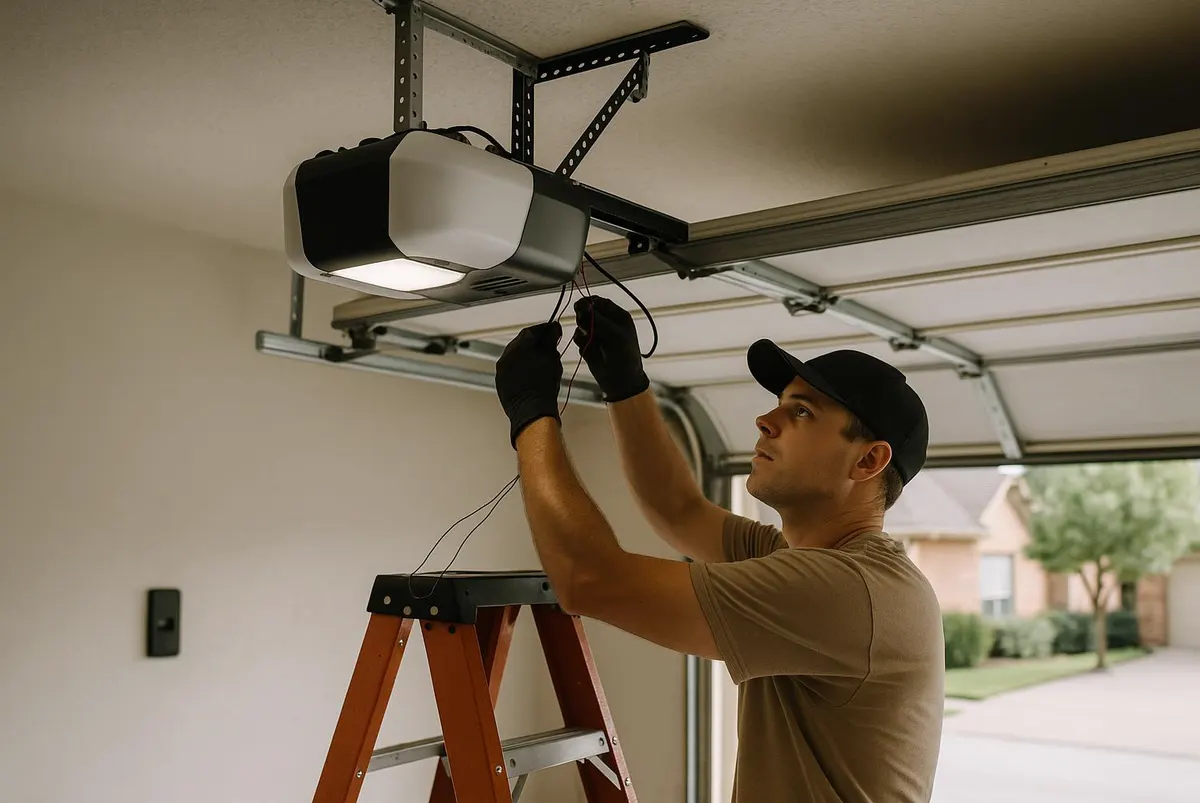
What a Technician Actually Sees
On a typical call about this, nobody mentions safety when they first phone in. The homeowner says the door is "acting weird" or "making a bad noise," and the real story comes out once the technician starts testing. A photo-eye sensor is knocked an inch out of alignment because a bike or a cooler got leaned against it in the garage. A dog's nose is an inch from where the door comes down because the family never tested the auto-reverse after the last storm season. A spring has been rusting quietly from salt air and finally lets go while a kid is reaching for a ball near the track. None of these start as emergencies. They start as small, ignorable details that build up until the door does something it shouldn't, at exactly the wrong moment.
What Actually Goes Wrong
Safety sensors blocked or knocked out of alignment
Every garage door built in the last few decades has a pair of photo-eye sensors near the bottom of the track. If the beam between them is broken, the door is supposed to stop or reverse instead of closing. In this area, those sensors get bumped by bikes, coolers, surfboards, and lawn equipment stored along the garage walls, and afternoon downpours mean garages fill up with wet gear that gets shoved around in a hurry. A sensor that's tilted even slightly can stop reading correctly, which means a door that looks like it's working fine on a dry day fails to stop for a child or pet standing in its path.
Auto-reverse that doesn't actually reverse
Auto-reverse is the mechanical backup to the sensors — if something pushes against the bottom of the door as it closes, it's supposed to stop and go back up. Springs that have lost tension from age or corrosion, or openers with worn force settings, can fail this test completely. A door that should bounce off a toy or a tail instead keeps coming down.
Pinch points on older panel sections
Older garage doors, and some replacement panels installed without matching hardware, don't have the rounded, pinch-resistant edges that modern doors use between sections. Small fingers find these gaps at exactly hand height. This is a common source of real injuries — not dramatic ones, but the kind that sends a family to urgent care.
Openers and remotes within reach of kids
Wall-mounted openers at child height, and remotes left in cup holders or on low shelves, let young kids trigger a door on their own, with no adult watching to confirm the path is clear.
Hardware weakened by humidity and salt air
Cables, springs, and track hardware near the coast corrode faster than inland. Rust doesn't announce itself with a slow decline — a cable or spring that's been degrading for months can snap suddenly, sending hardware down fast and sometimes pulling the door off balance.
How Bad It Can Get
The outcomes range from a pinched finger to much more serious injuries from a falling door or a snapped cable whipping loose. Pets are often lower to the ground and slower to react than people expect, which puts them directly in the path of a door that doesn't stop. Beyond injuries, a door that comes down hard on a bike, a cooler, or a parked car causes real property damage, and a door that's already struggling with a weak spring is far more likely to come off its track entirely during the attempt.
The Specific Actions That Prevent It
- Test auto-reverse monthly: place a roll of paper towels or a 2x4 flat on the ground where the door closes. If the door doesn't stop and reverse on contact, stop using it until it's serviced.
- Check the sensors with your eyes, not just your ears: the small LED lights on each sensor should be solid, not blinking. If they're blinking, something is blocking or misaligning the beam.
- Keep storage away from the sensor zone: give the bottom 6 inches of each track a clear buffer, especially in garages that double as gear storage for the rainy season.
- Move openers and remotes out of reach: wall units should be at least 5 feet up, and remotes shouldn't live anywhere a toddler can grab them.
- Have cables and springs inspected before they're visibly rusted: by the time corrosion is obvious, the hardware is already weaker than it looks.
- Teach kids the door is not a toy: no racing under it, no playing near the track while it's moving, no leaning bikes against the sensors.
When to Call Vero Beach Garage Door Pro
If your auto-reverse test fails, if a sensor light won't stop blinking no matter what you move, or if you see rust forming on cables or spring coils, it's time to call. We handle Garage Door Cable Repair and Garage Door Spring Repair for homes across Vero Beach, Sebastian, and the rest of the Treasure Coast, and we'll also check your opener's force settings and sensor alignment while we're there, so the fix actually solves the problem instead of masking it.
If something about your garage door doesn't feel right around your kids or pets, don't wait for it to get worse. Call Vero Beach Garage Door Pro today and we'll get it checked and fixed right.